Tiktok

Official account

Video Account

Arc Welding Explained: 5 Essential Processes for Success
Date:2025-04-27Click:1613
Understanding Arc Welding: The Fundamentals
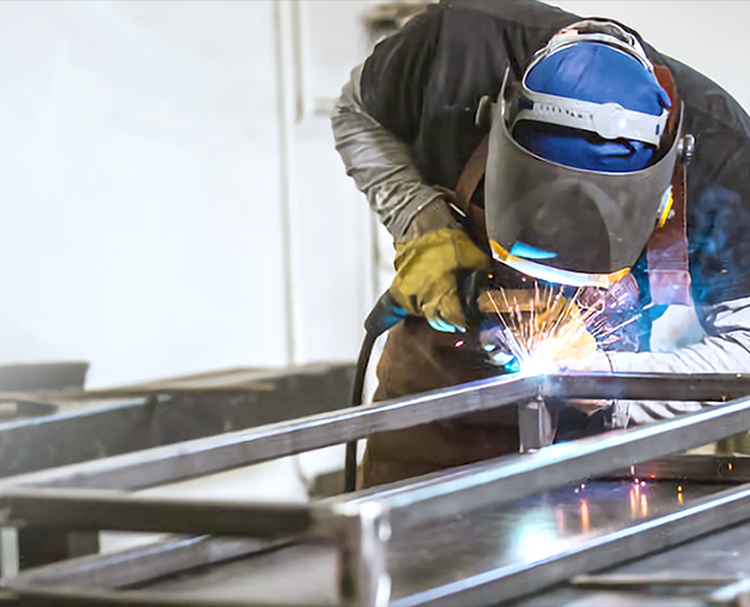
Arc welding represents one of the most versatile and widely-used metal fabrication techniques in modern industry. At its core, arc welding harnesses the remarkable power of electricity to generate intense heat—reaching temperatures of up to 11,000°F—capable of melting and fusing metals together permanently.
What makes arc welding so effective is the creation of complete fusion between materials. Unlike mechanical fastening methods, properly executed welds essentially transform separate pieces into a single unified structure, often creating joints that are actually stronger than the base materials themselves.
How Does Arc Welding Work?
The basic principle behind all arc welding processes is surprisingly straightforward: electricity flows through a circuit created between your welding power source, the electrode, and the workpiece. When you pull the electrode slightly away from the metal surface, it creates an electrical arc—essentially a controlled lightning bolt—that generates intense heat.
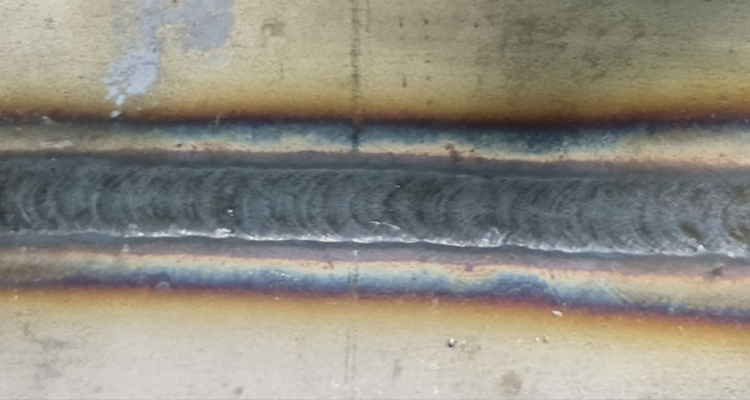
This concentrated heat creates a molten pool where both the base metals and any filler material melt together. As this pool cools and solidifies, it forms a permanent bond that can withstand tremendous stress.
However, this molten pool is extremely vulnerable to atmospheric contamination. Oxygen, nitrogen, and hydrogen can be absorbed into the weld, creating weakness and porosity. That’s why all arc welding processes incorporate some form of protection—typically a shield of inert or semi-inert gas—to protect the molten metal until it solidifies.
 " />
" />
Essential Arc Welding Terminology
Before diving into specific processes, let’s clarify some key terminology that applies across all arc welding methods:
Electrode: The material that conducts electricity to create the arc and often serves as filler material
Arc: The electric discharge between electrode and workpiece that generates welding heat
Shielding gas: Protective gas that prevents atmospheric contamination of the weld pool
Weld pool: The localized area of molten metal where fusion occurs
Base metal: The workpiece materials being joined
The 5 Primary Arc Welding Processes
1. MIG Welding (Metal Inert Gas)
Also known as: GMAW (Gas Metal Arc Welding)
MIG welding has earned its reputation as the go-to process for beginners and professionals alike, thanks to its versatility and relatively gentle learning curve.
How MIG Works:
The process employs a continuously fed wire electrode that serves double duty as both the arc conductor and filler material. As you pull the trigger on a MIG gun, three things happen simultaneously:
Wire feeds automatically at a preset speed
Electricity flows through the wire
Shielding gas (typically a mix of argon and CO₂) flows around the wire
The result is a clean, efficient welding process that produces minimal slag and splatter.
Best Applications for MIG:
Automotive repair and fabrication
Structural steel fabrication
Furniture manufacturing
Home workshop projects
Production environments requiring high deposition rates
Limitations:
Not ideal for outdoor applications (wind disperses shielding gas)
Requires external gas supply (reducing portability)
Less effective on very thin materials (compared to TIG)
2. TIG Welding (Tungsten Inert Gas)
Also known as: GTAW (Gas Tungsten Arc Welding)
When precision and aesthetic quality are paramount, TIG welding stands supreme among arc welding processes.
How TIG Works:
Unlike other methods, TIG uses a non-consumable tungsten electrode to create the arc. The welder holds the TIG torch in one hand to maintain the arc while manually feeding filler rod with the other hand (if needed—TIG can also be performed without filler on thin materials). A stream of inert gas (usually pure argon) shields the weld area.
This two-handed coordination makes TIG more challenging to master, but the results are worth it.
Best Applications for TIG:
Aerospace components
Artistic metalwork
Bicycle frame construction
Thin sheet metal fabrication
Aluminum and stainless steel projects
Motorcycle exhaust systems
Limitations:
Slower deposition rate than other processes
Steeper learning curve
Less suitable for thicker materials (over 1/4″)
Equipment tends to be more expensive
3. Stick Welding (Shielded Metal Arc Welding)
Also known as: SMAW (Shielded Metal Arc Welding)
The venerable workhorse of the welding world, stick welding remains incredibly popular for its simplicity, versatility, and ability to function in challenging environments.
How Stick Works:
Stick welding uses a fixed-length consumable electrode coated in flux. When current flows through the electrode and creates an arc, the flux coating vaporizes to create a protective gas shield and forms slag that further protects the cooling weld. This built-in protection means no external gas supply is needed.
Best Applications for Stick:
Construction sites
Field repairs
Pipeline welding
Structural steel erection
Underwater welding (with special electrodes)
Farm and ranch repairs
Working with rusty or dirty metals
Limitations:
Requires more skill to produce clean welds
Creates slag that must be removed
Less suitable for thin materials
Higher spatter rates than MIG or TIG
4. Flux-Cored Arc Welding (FCAW)
Think of FCAW as a hybrid that combines some of the best attributes of both MIG and stick welding.
How FCAW Works:
FCAW uses equipment similar to MIG welding but with a special hollow wire electrode that contains flux in its core. When the wire melts, this flux creates its own shielding gas protection (self-shielded FCAW) or works in conjunction with an external shielding gas (dual-shield FCAW).
Best Applications for FCAW:
Outdoor construction
Structural steel fabrication
Shipbuilding
Heavy equipment manufacturing
High-deposition welding on thick materials
Limitations:
Produces more smoke and fumes than other processes
Higher cleaning requirements due to slag
Not ideal for thin materials or cosmetic welds
Equipment is more expensive than basic stick welding
5. Plasma Arc Welding (PAW)
At the cutting edge of precision welding technology lies plasma arc welding—a specialized process that takes the precision of TIG welding to new heights.
How PAW Works:
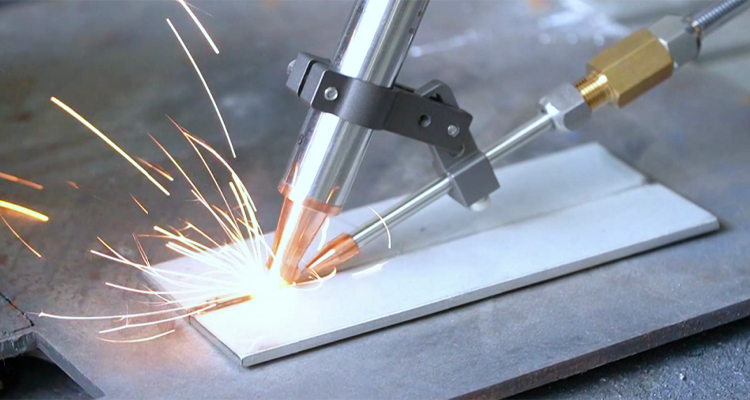
In plasma arc welding, the arc is constricted through a specially designed nozzle, creating a concentrated plasma jet that can reach temperatures exceeding 50,000°F. This intensely focused arc can be precisely controlled for exceptional accuracy.
PAW uses a non-consumable tungsten electrode positioned inside the torch, with separate gas flows for the plasma formation and for shielding.
Best Applications for PAW:
Aerospace components
Medical device manufacturing
Microelectronics
Precision automotive parts
Thin material joining (as thin as 0.015″)
Automated welding systems
Limitations:
Equipment is significantly more expensive
Requires advanced technical knowledge
Setup and parameter adjustment are complex
Less versatile for general-purpose welding
Choosing the Right Arc Welding Process
Selecting the optimal welding process depends on several factors:
Material Considerations
Material type: Different metals respond better to certain processes
Material thickness: Thin materials generally favor TIG, while thicker materials may benefit from FCAW or stick
Material condition: Rusty or dirty materials may require stick or FCAW
Environment Factors
Indoor vs. outdoor: Wind affects gas-shielded processes
Power availability: Some processes require more robust power supply
Space constraints: Consider equipment portability and workspace requirements
Project Requirements
Appearance: When aesthetics matter, TIG typically produces the cleanest welds
Strength requirements: Structural applications have different needs than decorative ones
Production speed: MIG and FCAW generally offer higher deposition rates
Arc Welding Safety Essentials
Regardless of which arc welding process you choose, safety must always be your first priority:
Eye protection: Always use a proper welding helmet with the appropriate shade number
Skin protection: Wear flame-resistant clothing, leather gloves, and boots
Respiratory protection: Use proper ventilation and/or respiratory protection
Electrical safety: Ensure proper grounding and insulation
Fire prevention: Keep a fire extinguisher nearby and remove flammable materials from the work area
Getting Started with Arc Welding
Ready to try your hand at arc welding?
Here’s how to begin:
Start with MIG: For most beginners, MIG welding offers the gentlest learning curve
Take a class: Local community colleges, maker spaces, and welding supply shops often offer introductory courses
Practice consistently: Like any skill, welding requires regular practice to master
Start with simple projects: Build confidence with straightforward joints before attempting complex fabrication
Invest in quality safety gear: Never compromise on protective equipment
Conclusion
From automotive repair shops to spacecraft construction, arc welding remains an indispensable fabrication technology. By understanding the strengths and limitations of each process—MIG, TIG, stick, FCAW, and plasma arc welding—you can select the right technique for any project.
Whether you’re pursuing welding as a hobby or considering it as a career path, mastering these fundamental processes will open up countless creative and professional opportunities. The demand for skilled welders continues to grow across industries, making this an excellent time to develop your arc welding expertise.
If you need laser welding machine or other related professional equipment, please contact us