Tiktok

Official account

Video Account

How Laser Welding Machines Improve Precision in Manufacturing
Date:2025-04-29Click:1342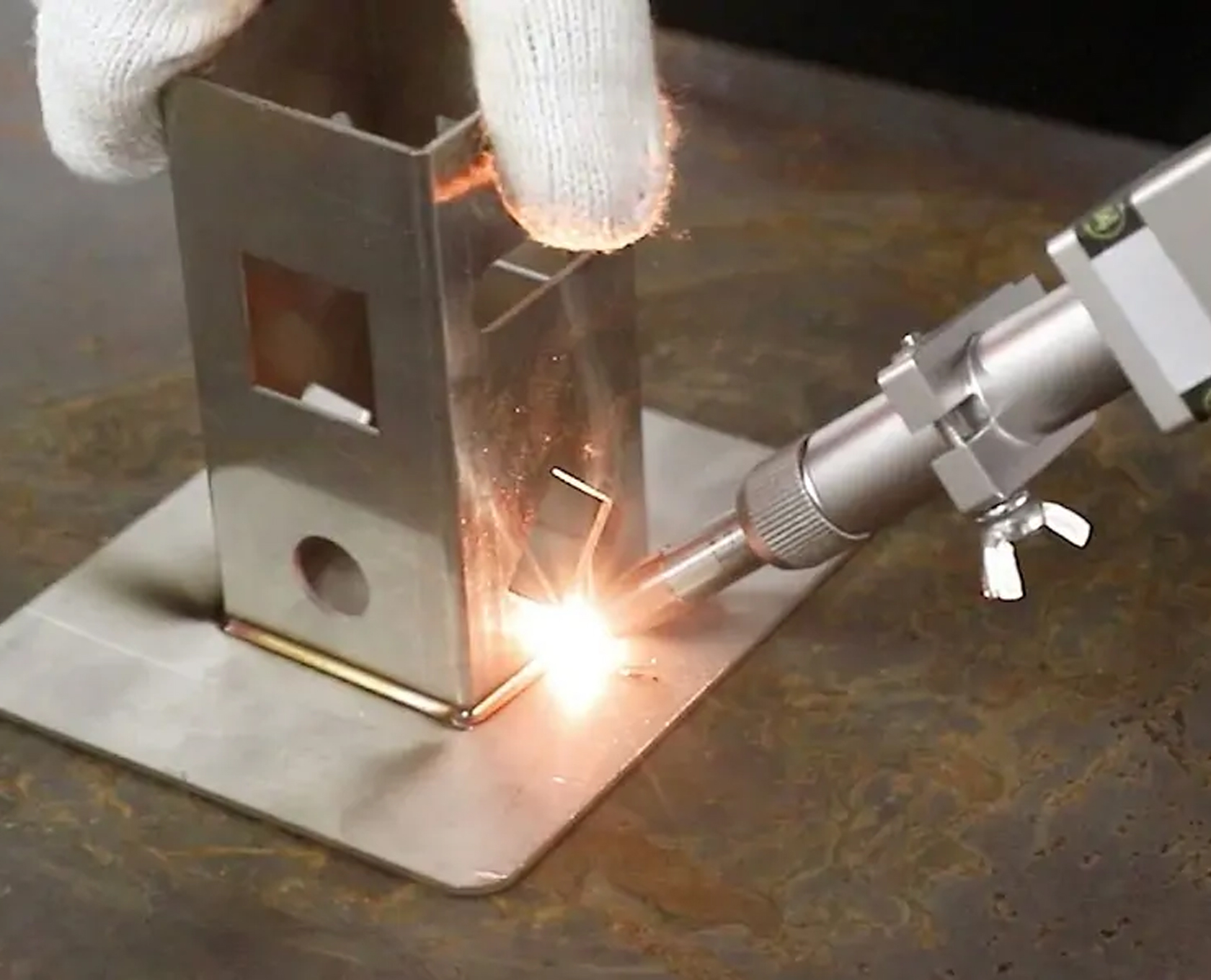
In this era of technology, manufacturing processes are constantly evolving. Among them, laser welding technology is cleaner, faster, and more reliable than traditional welding methods. It will change all walks of life.
Follow me and discuss how laser welding machines can improve manufacturing accuracy, thereby improving product efficiency and quality in various fields such as automobiles, aerospace, electronics, and medical devices.
Laser welding is a process that uses a highly focused laser beam to melt the material at the welding joint, allowing for the fusion of two materials. The laser beam’s energy is concentrated in a very small spot, creating localized heat that melts the base material, and the molten pool solidifies to form a strong bond. The precision and control provided by laser welding come from the ability to direct and focus the laser with incredible accuracy, typically to a level of 0.1mm or even less.
Lasers, in the context of welding, are essentially light sources that emit high-energy beams, which are absorbed by the material to be welded. The focused laser beam heats the material to its melting point, creating a molten pool that solidifies as the material cools down. This allows for an efficient and precise joining of metals or plastics without affecting surrounding areas.
A laser welding system typically uses one of two main types of laser sources: solid-state lasers (such as fiber lasers) or gas lasers (such as CO₂ lasers). The laser source generates a beam of coherent light, which is then directed to a focus point using optical components like mirrors and lenses.
The process of focusing the laser beam is crucial for welding precision. The beam is typically focused into a very small spot, often less than 1mm in diameter, which allows for the highly localized heating of the material. The energy from the laser beam is absorbed by the material at this small point, causing it to reach the melting point rapidly. Because of the precise focusing capabilities, heat is concentrated only where it is needed, minimizing the impact on the surrounding material.
There are several types of laser welding, with fiber laser welding and CO₂ laser welding being the most common. Each has its specific applications and benefits:
To measure the precision of a laser welding process, several key metrics are considered:

Laser welding stands out in the manufacturing industry due to its exceptional precision. Unlike traditional welding methods that rely on manual operation or large equipment, laser welding machines can consistently produce high-quality welds with minimal human intervention.
One of the biggest advantages of laser welding is the ability to control the size and shape of the weld. This precision makes it ideal for applications that require tiny, intricate welds, such as in the electronics or medical device industries. By adjusting the laser’s power, focus, and speed, manufacturers can create welds that are precisely the right size for each specific application, ensuring strength without unnecessary material use or excess heat.
The precision of laser welding minimizes the heat affected zone (HAZ) compared to traditional welding methods. Because the laser beam is highly focused, the surrounding material is less affected by heat, reducing the risk of distortion, warping, or other unwanted side effects. This is particularly important in industries like aerospace, where the integrity of the surrounding material is crucial.
Laser welding is faster than traditional methods, which contributes to higher productivity in manufacturing. Despite its speed, the precision of laser welding is not compromised. The ability to weld rapidly without sacrificing quality makes laser welding an ideal choice for mass production environments, such as automotive manufacturing, where both speed and accuracy are vital.
Laser welding excels in working with thin materials, which can be challenging for other welding methods. The concentrated laser beam allows for precise control when working with delicate, thin components, ensuring that the weld is strong without damaging the material. This capability is particularly valuable in industries that deal with micro-manufacturing or require fine detailing.
Due to the precision of the laser welding process, less post-weld finishing is required. Traditional welding methods often leave behind slag, spatter, or distortion that need to be cleaned or smoothed. Laser welding, on the other hand, produces clean, precise welds with minimal cleanup required. This results in lower labor costs and faster turnaround times.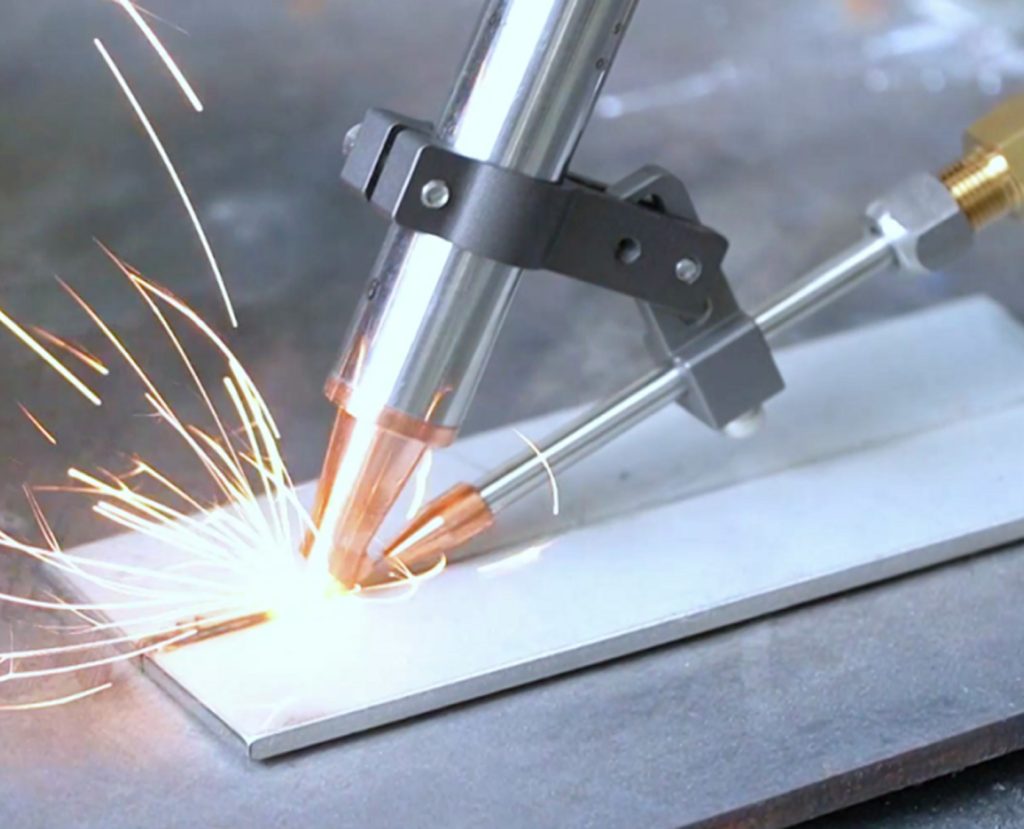
When comparing laser welding with traditional welding methods, several advantages stand out in terms of precision.
MIG (Metal Inert Gas) and TIG (Tungsten Inert Gas) welding rely on the skill of the operator to achieve a precise weld. While these methods can be very effective for certain applications, they cannot match the inherent precision of laser welding. Laser welding machines are automated, providing repeatable, consistent results without the variation that may arise from human error.
Resistance welding, which is commonly used in sheet metal applications, involves applying heat generated by electrical resistance to join materials. While this method is useful for specific tasks, it is less precise compared to laser welding. Laser welding’s ability to focus energy into a small spot allows it to join materials with finer control, especially in complex or intricate designs.
In traditional welding, such as arc welding, a significant amount of heat is applied to the workpiece. This can cause thermal distortion, affecting the material’s properties and appearance. Laser welding, with its precision and localized heat application, avoids these issues, making it the ideal choice for components that require high precision and minimal thermal damage.
Laser welding allows for greater flexibility in handling complex geometries compared to traditional methods. This capability is particularly important in industries like aerospace and automotive manufacturing, where parts often have intricate shapes. Traditional methods may struggle to join parts with complex contours, while laser welding can be easily programmed to navigate complex shapes with high accuracy.
Laser welding technology has transformed manufacturing by providing an efficient, highly precise method of joining materials. The ability to control weld size, heat input, and welding speed allows manufacturers to achieve high-quality results with minimal distortion and waste. When compared to traditional welding methods, laser welding stands out for its precision, speed, and ability to work with thin materials and intricate parts.
For industries that require fine details, such as electronics, medical devices, and aerospace, laser welding is not only a cost-effective solution but also one that offers consistent and repeatable results. By integrating laser welding into manufacturing processes, companies can improve their product quality, reduce post-weld processing, and increase overall efficiency. We at Dynalasers are specialized in laser welding machines. If you are interested in our products or want to purchase them, please contact us.